
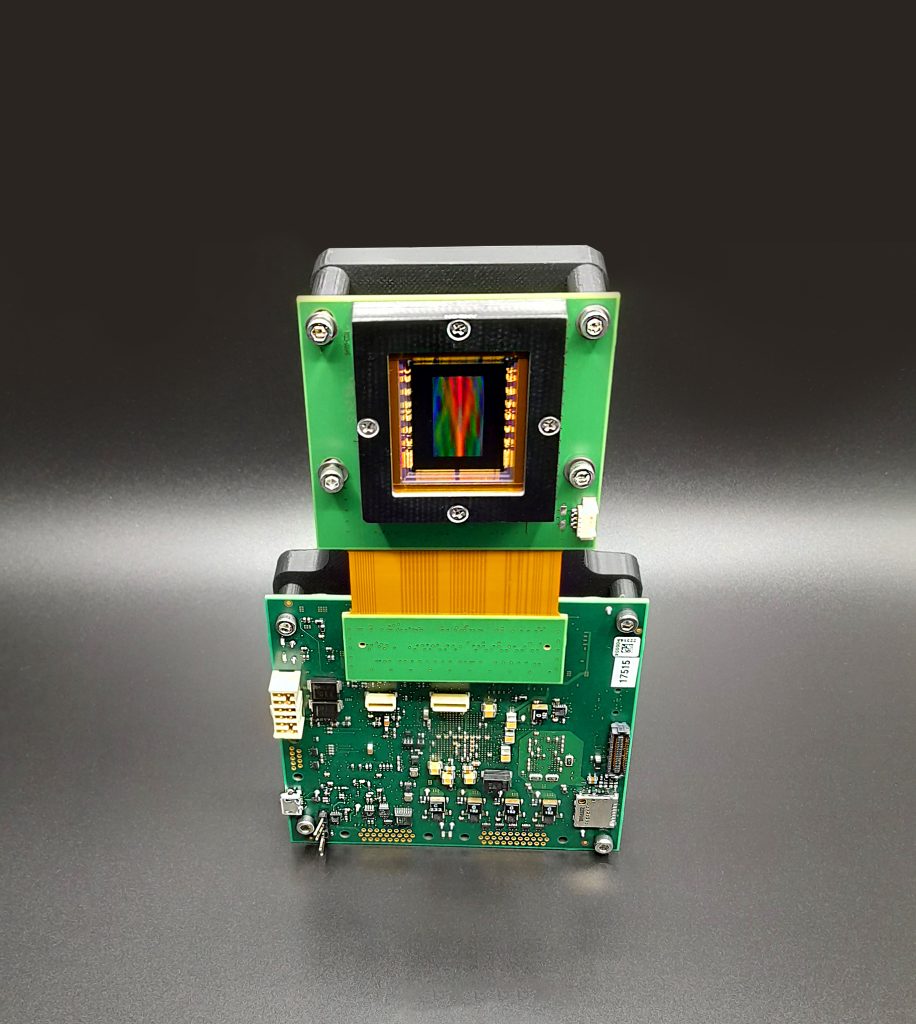
The development of a groundbreaking New Space ultra-low-light camera for Earth observation applications is continuing after the CEOI awarded an extension grant to XCAM.
The grant award follows the successful completion of the project’s first phase and provides funding for an eight-month extension which began in July 2025.
The funding will advance the design and testing of a flight-ready, ultra-low-noise camera system capable of capturing exceptionally high-quality images of Earth, even in extremely low-light conditions.
The CEOI’s continued support recognises the transformative potential of XCAM’s ultra-low-light imaging technology. Once completed, the system is expected to enable a new generation of Earth observation capabilities, including:
- Monitoring biodiversity and crop health
- Measuring thermospheric wind speeds
- Mapping polar ice during winter darkness.
These applications will provide valuable insights for climate science, environmental monitoring, and sustainable resource management.
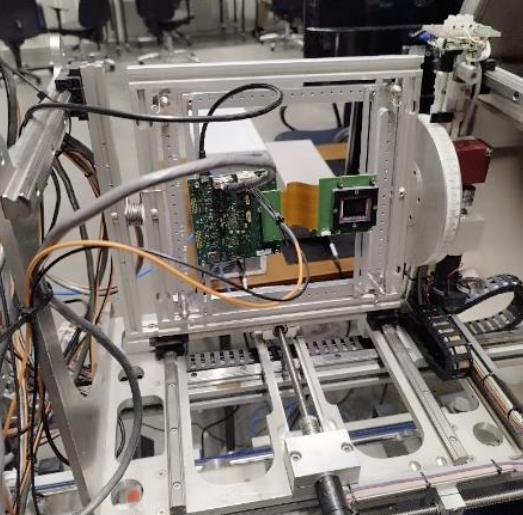
Working in collaboration with The Open University’s Centre for Electronic Imaging, the project team will refine the camera’s architecture to achieve state-of-the-art performance and reach Technology Readiness Level 6 (TRL6).
Key technical goals include:
- Redesigning flight electronics to enable 30 frames-per-second operation
- Optimising performance to approach 0.25 e⁻ rms ‘photon-counting’ sensitivity
- Completing radiation validation to ensure reliability in space environments
Dr Nicolas Lévêque, Director of the CEOI, said: “We are delighted to continue our support for this exciting project, which is set to play a pivotal role in overcoming one of most significant challenges faced by Earth observation missions – low light.
“It is a major step forward in space imaging capabilities, with an increased duty cycle of the payload thanks to its low-light capability. It will therefore enable better environmental monitoring and more insightful tracking of natural disasters and human activities in regions of strategic importance at local times that other instruments cannot achieve.”
The compact camera system will be offered to instrument builders and satellite developers worldwide, supporting the rapidly growing micro- and nano-satellite markets.